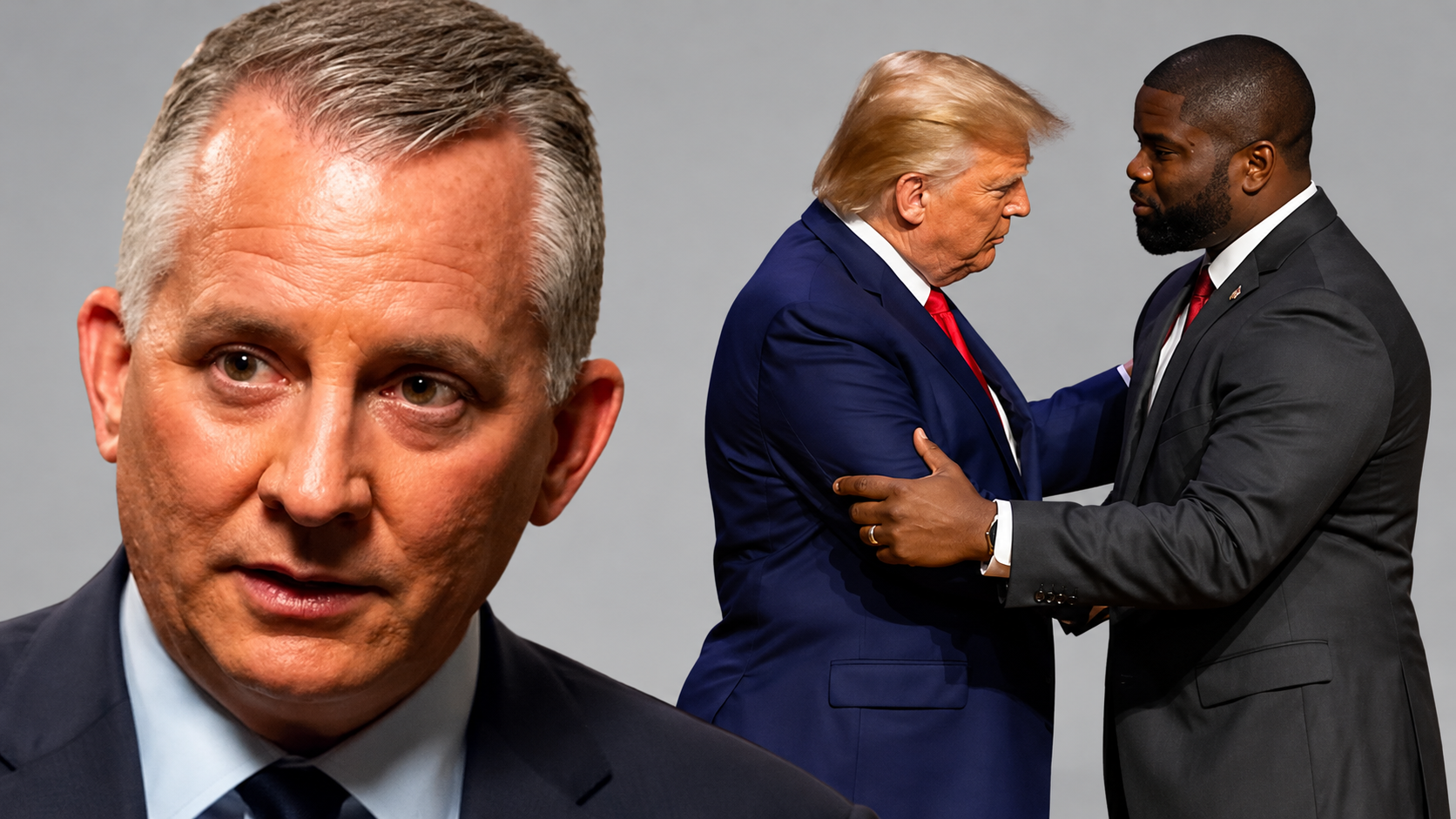
David Jolly is done letting Byron Donalds call him a socialist without a response. At a recent Democratic campaign event, the Democratic nominee for Florida governor flipped the label back on his Republican opponent, listing what he sees as examples of socialism for Trump, Elon Musk and big corporations.
Video:
View this post on Instagram
“The other side of the aisle likes to throw around the term socialism,” Jolly told the crowd. “I just call it cheaper insurance.”
The political news that affects your wallet, your rights and your vote, broken down in plain language. Free in your inbox.
Donalds and Florida Republicans have spent the race calling Jolly a “Trojan horse” for the Democratic Socialists of America, a left wing political group. One of their main targets is Jolly’s plan for a state run hurricane insurance fund. Jolly, a former Republican congressman who became a Democrat before launching his campaign, has repeatedly said he rejects socialism and calls himself a capitalist.
His first example was the hurricane fund Florida already has. “Tell me what a hurricane fund currently is that bails out our insurance companies?” Jolly asked. “It sounds a whole lot like socialism to me.”
He was talking about the Florida Hurricane Catastrophe Fund. Republican lawmakers created it in 1993 after Hurricane Andrew, and Republican legislatures have run and expanded it for three decades since. Right now, it pays insurance companies back for part of their losses after major hurricanes. Jolly’s plan would go further. He wants one state backed fund to carry all hurricane and wind risk for Florida homes, taking that risk out of private insurance policies. He says that would cut homeowners insurance bills by 60 to 70 percent, since hurricane and wind coverage makes up most of what Floridians pay.
Next, Jolly turned to Elon Musk. “What does it mean when we give Elon Musk billions of dollars of tax credits and we don’t tax his profits?” he asked. “Sounds a whole lot like socialism to me.” Tax credits are amounts the government lets a person or company subtract from what they owe in taxes. Musk’s companies, including Tesla, have benefited from federal credits tied to electric vehicles and clean energy.
Then Jolly went after Trump directly, starting with the $5,000 checks. “What about a president who says, hey, if you vote for me and elect my team, we’re going to give you a $5,000 check?” Jolly said.
Trump made that promise in September at the Republican midterm convention in Dallas. He pledged a $5,000 “Trump dividend” to every adult citizen if Republicans win both the House and the Senate in November. He has repeated it since, but he has not explained where the money would come from or who would approve it. Paying every adult citizen would cost about $1.2 trillion.
Jolly also took aim at Trump’s moves in Latin America, a major issue for Florida voters with roots in Venezuela, Cuba and Nicaragua. “What about a president who removes Maduro but supports Delcy in Venezuela?” he said.
U.S. forces captured Venezuelan leader Nicolás Maduro in January. Delcy Rodríguez, who served as Maduro’s vice president, became Venezuela’s acting president, and Trump has said she is cooperating with the U.S. Jolly also claimed Trump suggested allowing American investment in hotels in Cuba, which he has called a move that props up the Cuban government.
His last example hit closest to home. “What about a president who invited Vladimir Putin to South Florida to come to Miami in December,” Jolly said, “a leader who has backed the Maduro regime, the Sandinistas, and the Cuban regime?” The Sandinistas are the ruling party in Nicaragua, led by Daniel Ortega.
The U.S. is hosting the G20, a yearly summit of leaders from the world’s biggest economies, at Trump National Doral, Trump’s golf resort near Miami, on December 14 and 15. Secretary of State Marco Rubio confirmed in September that Putin was invited. Miami-Dade County Mayor Daniella Levine Cava has publicly criticized the invitation.
Florida voters choose between David Jolly and Byron Donalds on Tuesday, November 3.